
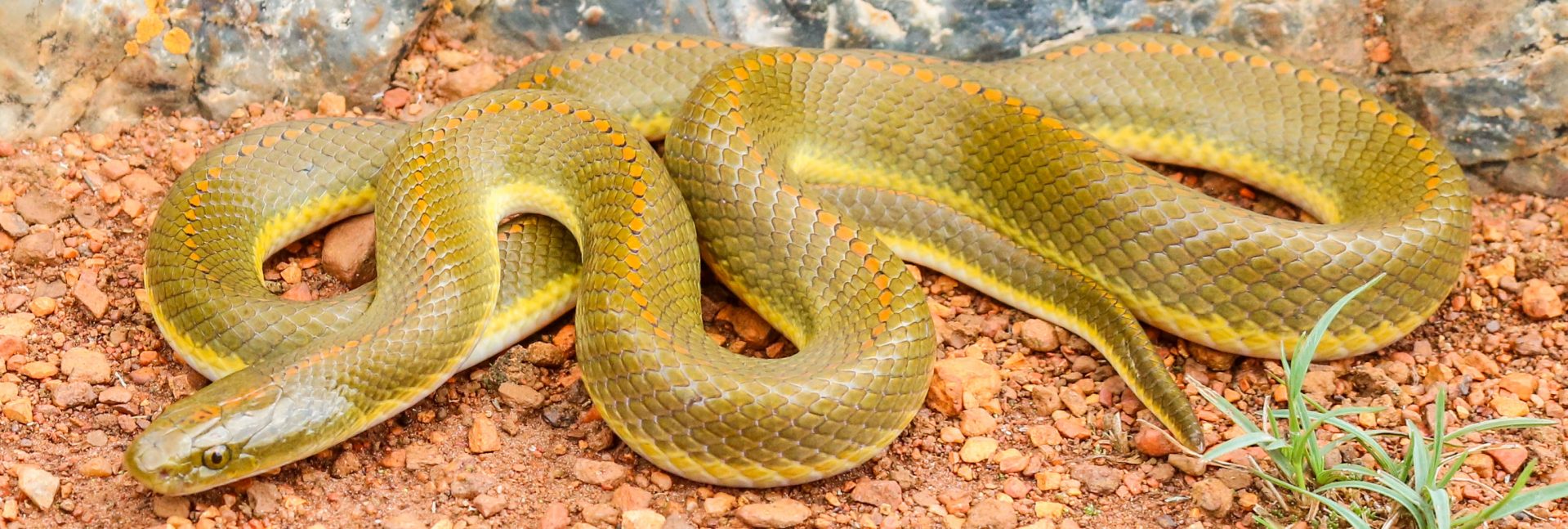
The scaly/cryptic world of snake scale counting.
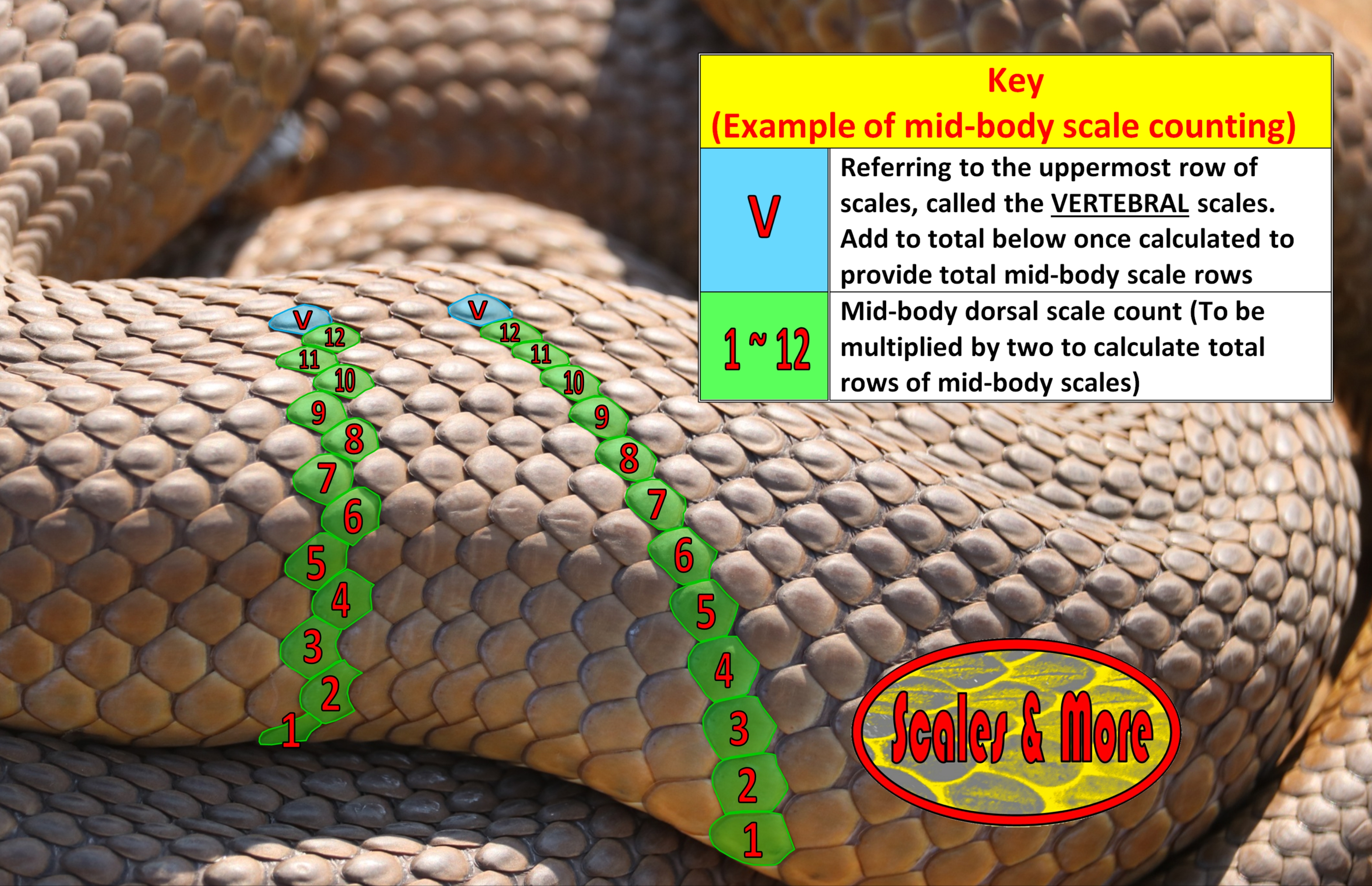
Yes you read that correctly. You’re probably wondering why on earth people would want to count scales.
Well, with a bit more work to be done, I’ll be doing a more complete article but for now, I thought to introduce you to the counting of a snakes’ ventral (belly) scales.
In short, scale counts, help distinguish between species of snakes that would morphologically appear very similar.
For a while both “wider than longer” and the “Dowling” system have been used/referred to in particular when reference to the ventral scale count.
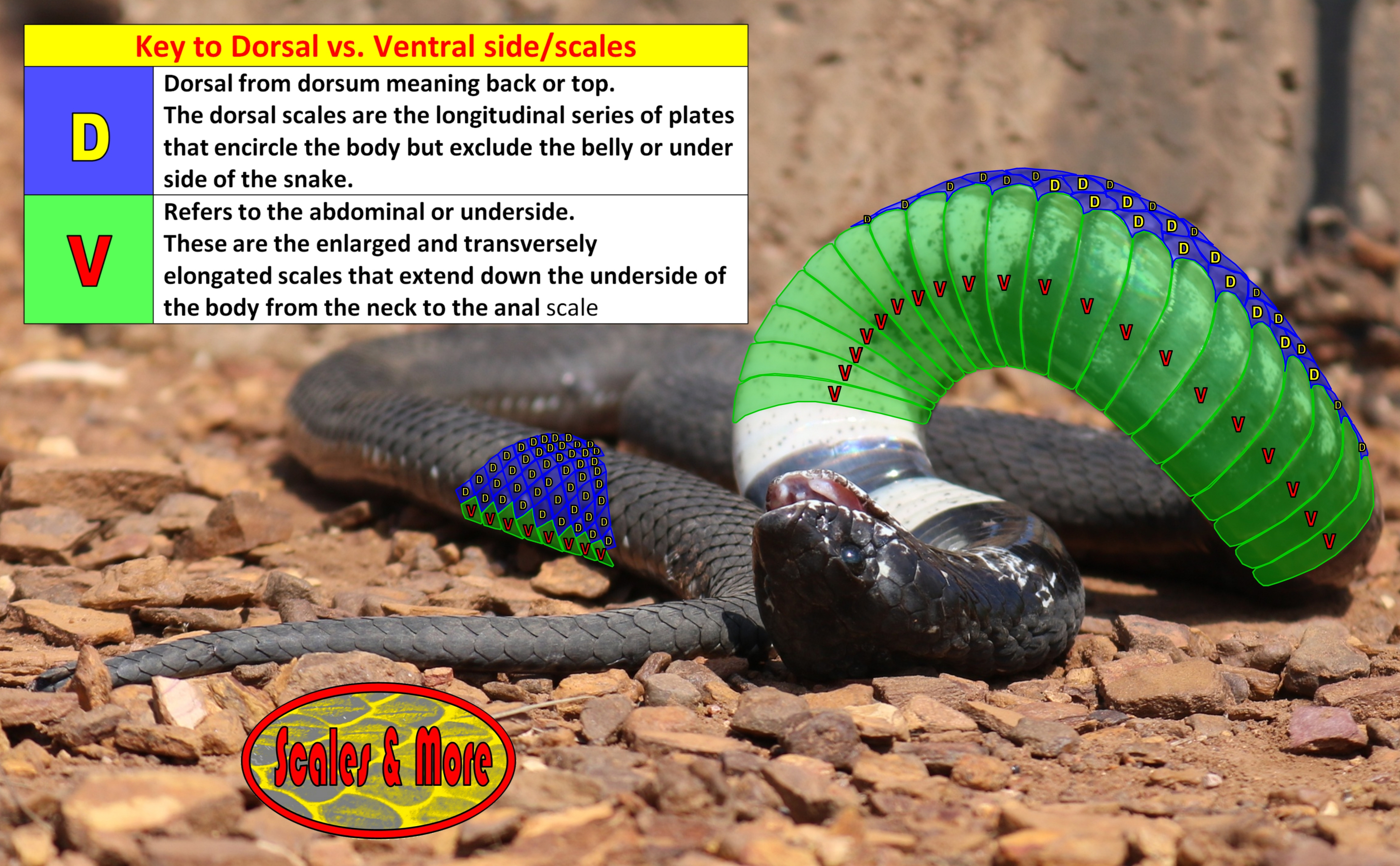
The ventral scale count has the purpose of determining the total amount of transversely elongated scales on the ventral (belly) side of a particular snake specimen from the first ventral scale below the head/neck to the last scale before the anal plate or scale covering the cloaca/anal opening.
Here is an interesting short explanation of the different techniques as well as why the Dowling system is the more consistant and accurate technique:
——————————————————————————-
The Dowling system of counting ventrals in snakes.
By D. G. Broadley, Umtali Museum.
Although Dowling defined his “standard system of counting ventrals” as long ago as 1951, his method has not been generally used by African herpetologists.
The last ventral counted is obviously the one immediately before the anal plate; the first one to be counted has been variously defined, but most early authors started using their counts with the “first plate distinctly wider than long” and practically all scale counts in the literature on African snakes were made according to this system.
Dowling proposed that the first ventral should be defined as the “first plate bordered on both sides by the first row of dorsals”, the latter to be determined by going well back on the body and following them forward until additional rows of small scales are inserted between them and the ventrals. Dowling found that in specimens of ten colubrid genera examined, anterior edge of the first ventral as defined above, corresponded with the position of the atlas-axis articulation of the vertebral column, so the number of ventrals corresponds to the number of dorsal vertebra.
The “Pseudo-ventrals”’ anterior to the first ventral as defined by Dowling, tend to fuse irregularly with the gular scales, so that the determination of the “first wider than long” was always subjective. The Dowling system, which usually gives counts 0-3 lower than the old “wider than long” system, gives a more precise ventral count and should, therefore, be adopted universally, as it yields more accurate data for biometric studies.
Dowling, H. G., 1951, A proposed standard system for counting ventrals in snakes. Brit. Journ. Herpetology, 1, pp. 97-99
————————————————————————————
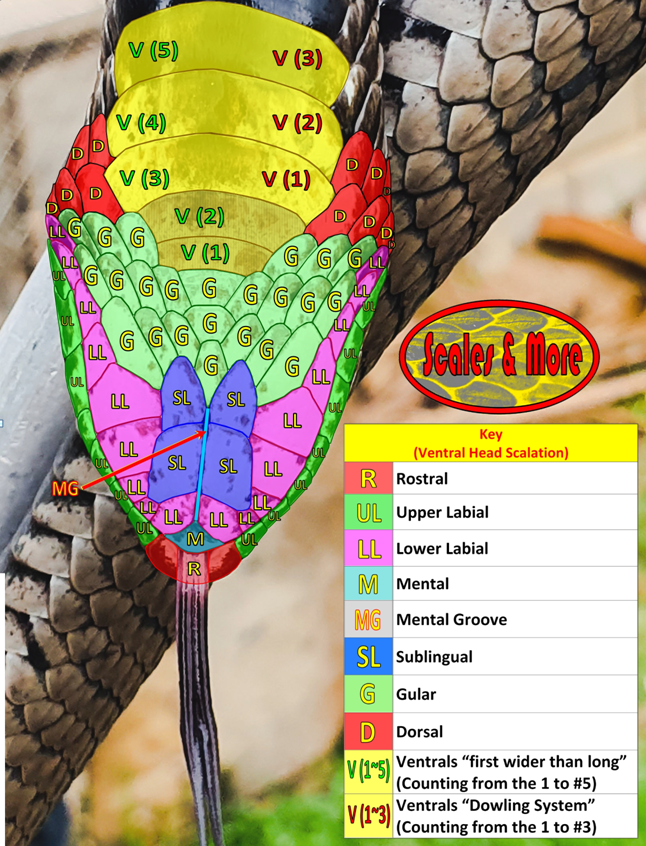
The illustration below should help you identify which scales you would be looking at when deciding where to start counting from when looking at the ventral scales for a scale count.
*To add to this write up for some guidance, a more descriptive explanation of the the scales on the Key table, herewith a short list to help the layman understand this scale description better:
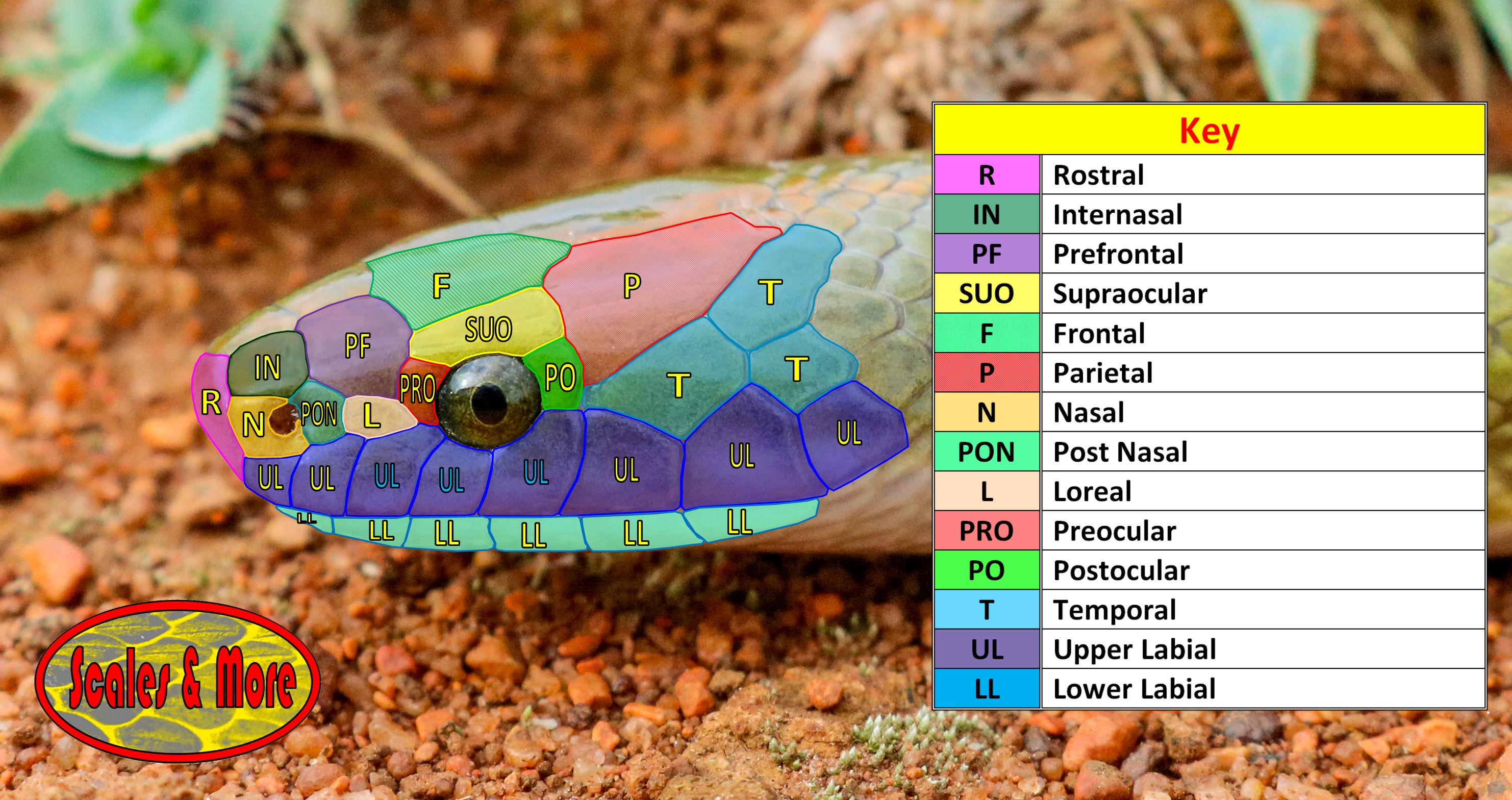
R = Rostral – Derived from Latin (Rostrum) referring to beak or nose and in this instance referring to the “nose” scale or shield right at the front edge of the snakes head between the upper labials on the upper jaw line.
Bordering this scale toward either sides of the Rostral scale we have the
UP = Upper Labial – Upper obviously refers to being positioned on the edge of the upper jaw line &
Labial simply referring to lip.
D = Dorsal – derived from Latin (Dorsum) meaning back and in this instance referring to the upper side of the snake from head to tail.
M = Mental from Latin (Mentum) meaning chin and in this instance referring to the almost triangular median scale at the front tip of the chin/lower jaw line.
MG = Mental groove: Most snakes have a longitudinal groove on the underside of the head between large, paired Sub Lingual scales on the lower jaw.
Bordering this Mental scale toward both sides of the lower jaw line we have the
LL = Lower Labials.
Toward the center of the lower jaw we have the
SL = from lower level or position in relation to the base word ‘Lingual = relating to, near, or on the side towards the tongue and in this instance the tongue channel sits in the center line of the base of the lower jaw.
G = Gular from Latin (Gula) meaning throat relating to the scales situated in the throat area of a snake.
V = Ventral from Latin (Venter) meaning belly and in this instance referring to the transversely elongated scales on the belly side of a snake from the neck of the snake to the last scale before the anal scale of the snake.
Happy counting.